Medical Cannabis for the Treatment of Peripheral Neuropathy due to Diabetes: A Systematic Review

Introduction: This systematic review evaluated randomized controlled trials (RCTs) conducted specifically in participants with diabetes and painful peripheral neuropathy to assess the effectiveness and safety of medical cannabis, isolated cannabinoids, or nationally approved cannabis-based medicines as adjuvant treatment, compared with placebo or baseline.

Materials and methods: Controlled clinical studies and RCTs in adults with diabetic peripheral neuropathy were eligible. Animal and in vitro studies were excluded. We searched PubMed, Google Scholar, Cochrane Library, and Scopus and screened 15,377 records; 35 full-text articles were assessed for eligibility, and 4 RCTs were included in the qualitative synthesis.

Results: Three of four studies reported statistically significant reductions in neuropathic pain with cannabinoid-based interventions compared with placebo, whereas one trial did not demonstrate superiority. In two trials using vaporized or sublingual Δ9-tetrahydrocannabinol (THC), doses in the range of approximately 16-18 mg were associated with clinically meaningful pain relief in participants. Adverse effects, including dizziness and cognitive symptoms, were common but generally mild-to-moderate, and discontinuations due to adverse effects varied across studies.

Discussion/conclusion: Evidence from four small, heterogeneous RCTs suggests that cannabinoid-based therapies may reduce pain in some patients with diabetic peripheral neuropathy; however, the limited number of studies, variability in formulations and comparators, and risk of bias preclude firm conclusions regarding efficacy. Observed THC doses around 16-18 mg/day delivered via vaporized or sublingual routes should be viewed as preliminary, hypothesis-generating ranges rather than definitive recommendations. Larger, contemporary RCTs with rigorous risk-of-bias control, standardized outcomes, and detailed safety reporting are needed.”

https://pubmed.ncbi.nlm.nih.gov/41714301

“three of four identified studies demonstrated statistically significant reductions in pain compared with placebo or baseline, suggesting that cannabinoid-based interventions may offer analgesic benefit for some patients with diabetic peripheral neuropathy.”

https://journals.sagepub.com/doi/10.1177/25785125261425444

The Paradoxical Effect of Cannabis Use on Cognition in Chronic Psychotic Disorders

Background/objectives: Cannabis use has a particularly high prevalence in individuals with psychotic disorders. Although cannabis use is generally associated with cognitive impairments in the general population, its impact on cognition in psychosis remains controversial. This study aimed to investigate the association between cannabis use and cognitive performance in a cohort of individuals affected by psychotic disorders.

Methods: A total of 105 inpatients with psychotic disorders (mean age: 40.3 years; 34 females) were recruited from the University Hospital Center “Mother Teresa” in Tirana. Data collection included socio-demographic and clinical variables. Cognitive functioning was evaluated using the Montreal Cognitive Assessment (MoCA), while psychopathology was assessed with the Brief Negative Symptom Scale (BNSS), the Calgary Depression Scale for Schizophrenia (CDSS), the Psychotic Symptom Rating Scales (PSYRATS), and the Scale for the Assessment of Thought, Language, and Communication (TLC).

Results: Cannabis users (CU) were more frequently male, younger, and exhibited an earlier onset of psychosis compared to non-users (No-CU). Importantly, CU demonstrated higher MoCA scores, with the most favorable outcomes observed among daily users.

Conclusions: Contrary to the prevailing assumption that cannabis use exacerbates cognitive decline, our findings indicate an unexpected association between cannabis use and preserved cognitive functioning in psychosis. These results underscore the need to consider dosage, frequency, and cannabinoid composition (THC/CBD ratio) when interpreting cannabis-related cognitive outcomes in psychotic disorders.”

https://pubmed.ncbi.nlm.nih.gov/41718389

“the present study highlights that, in certain cases, patients with psychosis who use cannabis may demonstrate relatively preserved or even superior cognitive performance compared with non-using patients. These results raise important clinical and research questions.”

https://www.mdpi.com/1873-149X/33/1/11

The dual roles of natural cannabidiol in combating oxidative stress and inflammation: A potential intestinal guardian

“Cannabidiol (CBD), a non-psychoactive and non-addictive phytocannabinoid derived from Cannabis sativa L., has attracted increasing attention for its therapeutic potential in intestinal diseases.

Accumulating evidence indicates that CBD exerts prominent antioxidant and anti-inflammatory effects within the gastrointestinal tract. Oxidative stress and redox imbalance are key drivers of epithelial barrier dysfunction, chronic inflammation, and disease progression in disorders such as inflammatory bowel disease (IBD) and colorectal cancer (CRC).

This review focuses on the redox-related mechanisms underlying CBD’s intestinal protective actions, highlighting its ability to regulate reactive oxygen species (ROS) production, activate the Nrf2-Keap1 antioxidant pathway, and modulate redox-sensitive inflammatory signaling, including NF-κB and the NLRP3 inflammasome.

In parallel, CBD engages the endocannabinoid system (ECS) and related receptors to preserve epithelial barrier integrity, regulate gut microbiota composition, and modulate intestinal oxidative stress and inflammation. We further discuss emerging evidence linking CBD’s regulation in the gut to systemic effects along the gut-organ axis, including the gut-brain and gut-liver axes.

Overall, this review synthesizes current evidence on how CBD integrates redox modulation, inflammation control, and intestinal barrier protection, providing a mechanistic framework for its potential application in intestinal disease and health.”

https://pubmed.ncbi.nlm.nih.gov/41713221

“CBD, as a non-psychoactive phyto-CB, has demonstrated substantial therapeutic potential for gastrointestinal health. By modulating the ECS, CBD enhances intestinal barrier integrity, regulates GM composition, and mitigates oxidative stress and inflammation. These effects contribute to its promising role in treating oxidative stress-related gastrointestinal conditions and maintaining intestinal homeostasis.”

https://www.sciencedirect.com/science/article/pii/S2213231726000492?via%3Dihub

Cannabis sativa L. roots extract modulates gastrointestinal motility and ameliorates ethanol-induced gastric ulcers in animal models

Introduction: Cannabis sativa L. roots are traditionally used to manage gastrointestinal (GI) disorders; however, experimental pharmacological evidence supporting these uses remains limited. This study investigated the chemical profile, safety, and GI-related pharmacological effects of an ethanolic extract of C. sativa roots (CEECs).

Methods: Chemical characterization was performed by spectrophotometric determination of total triterpenes and HPLC profiling. Safety and pharmacological effects were assessed through acute oral toxicity testing, antibacterial assays, and in vivo murine models of gastric emptying, diarrhea, and ethanol-induced gastric ulcer.

Results: CEECs showed a total triterpene content of 67.64 ± 5.39 μg LE·mg-1, and HPLC analysis detected p-coumaric acid and N-trans-feruloyltyramine. In vivo, CEECs significantly delayed gastric emptying at 50 mg·kg-1 (P = 0.0033) and reduced fecal output in the castor oil-induced diarrhea model at 50 (P < 0.001) and 100 mg·kg-1 (P = 0.0233), with no effect in the magnesium sulfate-induced model. CEECs also significantly reduced ethanol-induced gastric mucosal injury at 50 mg·kg-1 (P = 0.0484) and 100 mg·kg-1 (P = 0.0164). No signs of acute toxicity were observed at 2000 mg·kg-1. Antibacterial activity against Staphylococcus aureus strains was weak under the tested conditions.

Discussion: These findings provide experimental support for the traditional use of C. sativa roots in GI disorders and indicate their potential as a non-psychoactive source of bioactive constituents.”

https://pubmed.ncbi.nlm.nih.gov/41693782

“Overall, this study provides experimental support for the traditional use of cannabis roots in the management of diarrhea and gastric discomfort.”

https://www.frontiersin.org/journals/pharmacology/articles/10.3389/fphar.2026.1743428/full

Altered endocannabinoid system gene expression in inflammatory bowel disease mucosa: New perspectives in inflammatory bowel disease management

Background: Inflammatory bowel disease (IBD) is a broad classification including various chronic inflammatory gastrointestinal conditions that comprises two main disorders: Crohn’s disease (CD) and ulcerative colitis (UC). The key components of the endocannabinoid system (ECS) are highly expressed within the gastrointestinal tract, playing a crucial role in maintaining homeostasis and providing protection against intestinal inflammation.

Aim: To investigate possible impairment of the genes belonging to ECS by analyzing their expression levels in IBD patients and controls.

Methods: The paired biopsies of endoscopically inflamed (IM) and noninflamed (NIM) colonic mucosa from 30 IBD-diagnosed patients (17 UC and 13 CD), and the colonic mucosa from 17 non-IBD controls, were collected and analyzed. The messenger RNA expression level of cannabinoid receptor (CNR) 1, CNR 2, diacylglycerol lipase alpha, diacylglycerol lipase beta, fatty acid amide hydrolase (FAAH), G protein-coupled receptor (GPR) 18, GPR55, monoglyceride lipase, peroxisome proliferator-activated receptor gamma (PPARG), and transient receptor potential cation channel, subfamily V, member 1 (TRPV1) was determined by quantitative polymerase chain reaction.

Results: Six out of the 10 investigated genes were found to be dysregulated in at least one comparison. Specifically, in IBD patients, FAAH, PPARG, and TRPV1 were significantly downregulated in IM compared to NIM (FAAH, P = 0.012; PPARG, P = 0.001; TRPV1, P = 0.032) and in IM compared to controls (FAAH, P < 0.001; PPARG, P < 0.001; TRPV1, P = 0.002). An opposite trend was reported for CNR2 and GPR55, which showed an upregulation in IM compared to NIM (CNR2, P = 0.005; GPR55, P = 0.001).

Conclusion: We found a significant impairment of the ECS in IBD patients. Further analyses on larger cohorts are needed for a better understanding of the potential of cannabinoids in managing IBD.”

https://pubmed.ncbi.nlm.nih.gov/41700170

“The role of ECS in gastrointestinal physiology and the exact involvement of this system in IBD are still under investigation. Given this, our preliminary findings of the impairment of analyzed ECS genes in the IBD mucosa may serve as a basis for more in-depth research in larger cohorts to better understand the potential of cannabinoids in the management of IBD. After the introduction of artificial intelligence in the multi-omics drug delivery pipeline, future therapeutic targets should emerge, allowing for an even more personalized approach to IBD patients.”

https://www.wjgnet.com/1948-5190/full/v18/i2/113576.htm?appgw_azwaf_jsc=pjmb6U0PmJ8Jhw6KK0wkG7dIIANmqb_h-_TRqMyZe5S0n2nN12xjj6IEXzXltFiMGkrPy5gdVTqeL9FpqEwxg2IRdQtlxGphrdrCTC-8UB5iTS-53eOUekwL8V6ddoD3rUPUEsVlA14gjfLy8jmezIuYPV2vjfZ-Qoy-hEGym4pY7k9iS4yH7a1n8E6oEldBMV5stbazp3UctrqNhXMRb1bGo8NvE8b14zuvRdlvOI8MhNFNMTV-JysZCgnImMJg1XC1kSYNzlziNr4LuxGaowrDxyFS9KaRq_rQ_cNEf6ip8MXlhXSmgIWPhdPyy1s0xQclW9zOboCaV9pRBR83KQ

Cannabidiol Protects the Heart from Ischemia-Reperfusion Injury Through SIRT-1/PGC-1α Activation and NF-κB Modulation: Experimental Insights

“Myocardial ischemia-reperfusion (I/R) injury remains a major cause of acute cardiac dysfunction and is characterized by oxidative stress, inflammation, and apoptosis.

Cannabidiol (CBD), a non-psychoactive phytocannabinoid, has been reported to exert cardioprotective effects; however, its potential association with mitochondrial biogenesis-related signaling pathways remains incompletely understood.

This study aimed to evaluate the cardioprotective potential of CBD in a rat myocardial I/R model and to investigate its possible association with SIRT-1/PGC-1α-related mitochondrial biogenesis and NF-κB-dependent inflammatory signaling.

Forty rats were randomly assigned to four groups: sham, I/R, prophylactic CBD, and therapeutic CBD. Myocardial ischemia was induced by ligating the left anterior descending coronary artery for 30 min followed by 30 min of reperfusion. Heart and aortic tissues were evaluated histopathologically, immunohistochemically, biochemically, and genetically to assess oxidative stress, inflammation, and mitochondrial biogenesis-related markers. The I/R group exhibited marked myocardial injury characterized by hyperemia, edema, hemorrhage, and inflammatory infiltration, accompanied by elevated vascular cell adhesion molecule-1 (VCAM-1), vascular endothelial growth factor (VEGF), and NF-κB levels. Conversely, SIRT-1, PGC-1α, and B-cell lymphoma 2 (Bcl-2) expression significantly declined, alongside increased total oxidant status and oxidative stress index.

Prophylactic CBD treatment notably restored myocardial architecture, suppressed inflammatory and apoptotic responses, and enhanced mitochondrial biogenesis. Therapeutic CBD administration also provided partial protection.

CBD confers robust cardioprotection against myocardial I/R injury by activating the SIRT-1/PGC-1α axis, promoting mitochondrial biogenesis, and attenuating oxidative, inflammatory, and apoptotic pathways.

These findings indicated that confers significant cardioprotection against myocardial IR injury and that this protective effect is associated with modulation of SIRT-1/PGC-1α-related mitochondrial biogenesis and NF-κB-dependent inflammatory signaling. Further mechanistic studies are warranted to establish definitive causal relationships.”

https://pubmed.ncbi.nlm.nih.gov/41696987

https://journals.lww.com/cardiovascularpharm/abstract/9900/cannabidiol_protects_the_heart_from.534.aspx

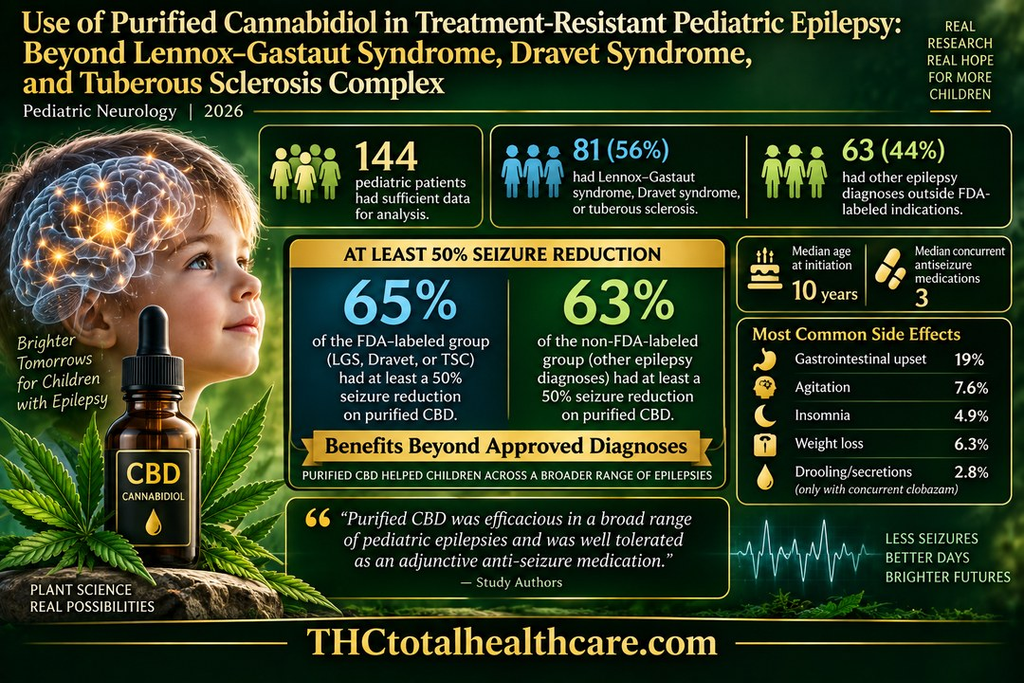
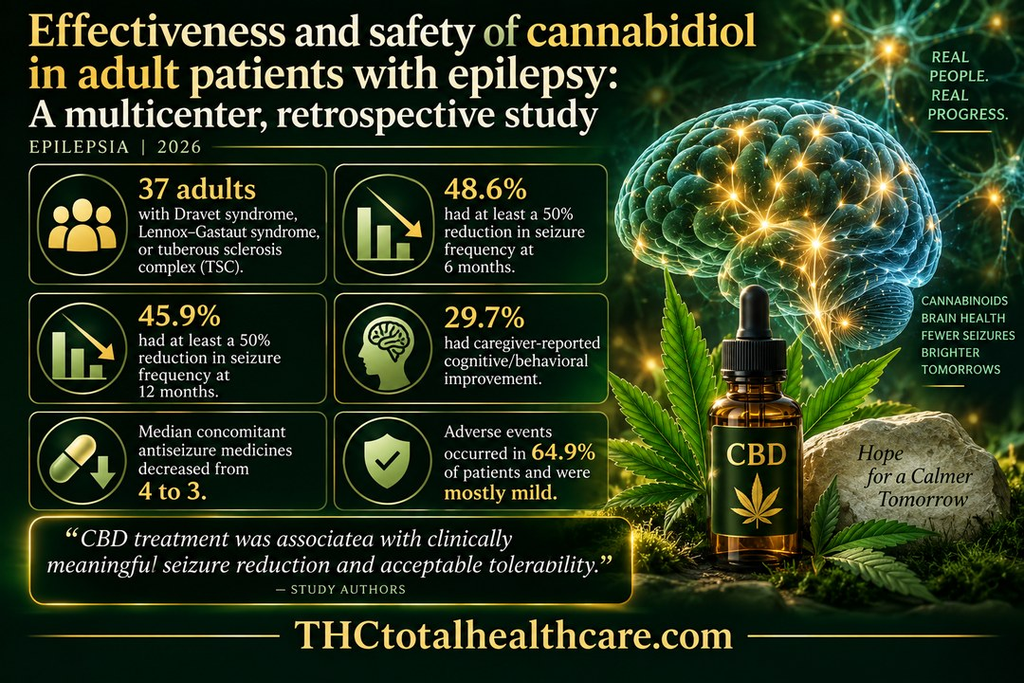
Highly purified cannabidiol (CBD) in CDKL5 deficiency disorder (CDD): Open-label prospective study

Objective: CDKL5 deficiency disorder (CDD) is an early-onset developmental and epileptic encephalopathy characterized by frequent drug-resistant seizures, cerebral visual impairment, motor dysfunction, and sleep and gastrointestinal disturbances. Preliminary evidence suggests that highly purified cannabidiol (CBD) may reduce seizure frequency, but data on its effects on comorbidities are lacking. This study aimed to evaluate the efficacy and safety of CBD in individuals with CDD.

Methods: We conducted a prospective, open-label, single-center study including patients with CDD aged >1 year. Outcomes included motor seizure frequency, caregiver- and clinician-rated Clinical Global Impression (CGI), and changes in sleep, motor abilities, and EEG at 3, 6, and 12 months. CBD plasma levels were measured with High-Performance Liquid chromatography-Mass Spectrometry (HPLC-MS).

Results: Eight of nine patients (all females; median age 10 years, range 1-24) completed the study, with a retention rate at 12 months of 8/9 (89%). One discontinued at 6 months due to a skin rash. A > 50% seizure reduction was observed in 8/9 patients at 3 months, 6/9 at 6 months, and 1/8 at 12 months. Seven patients showed some degree of vigilance improvements, three in motor performance, and two in sleep and constipation. All caregivers reported at least minimal overall improvement (CGI score 3) at 3 months, and three reported marked improvement (CGI score 2), with a peak at 3 months. Five patients showed adverse events during the trial, but none were considered serious. The median CBD dose at all time-points was 15.6 mg/kg/day (IQR 10.0-18.9) corresponding to a plasma dose of 69.9 ng/mL (IQR 29.8-114.6) and the median concentration/dose ratio was 4.7 (IQR 2.7-6.8).

Significance: The safety and efficacy of highly purified CBD in CDD were consistent with previous reports in the literature, with possible benefits beyond seizure control. Further studies are warranted to assess non-seizure outcomes and compare long-term efficacy across treatment options.

Plain language summary: We studied nine girls with CDKL5 deficiency disorder who had frequent, hard-to-treat seizures. They received cannabidiol for up to 1 year, added to their usual medicines. Most children had fewer seizures in the first months of treatment. Some families also noticed better alertness, eye contact, movement, sleep, or constipation. Side effects were usually mild and manageable. Although seizure frequency often returned to baseline by the end of the study, most families chose to continue cannabidiol. Because this was a small study without a placebo group, these results are preliminary, and larger controlled trials are needed.”

https://pubmed.ncbi.nlm.nih.gov/41677102

“In this exploratory prospective open-label trial, we suggest that CBD may be an effective and relatively safe therapeutic option in patients with CDD, which warrants further investigation through randomized controlled trials. CBD may be associated with effects not only on seizures but also on awareness, sleep, and motor functions.”

https://onlinelibrary.wiley.com/doi/10.1002/epi4.70213

Cannabinoids and the autophagy-related signaling in brain Tumors: From mechanistic insights to therapeutic Frontiers in glioblastoma

“Glioblastoma multiforme (GBM) is a very aggressive primary brain tumor in adults, characterized by extensive infiltration, therapeutic resistance, and a dismal prognosis, with an average life of roughly 14 months. Despite advances in oncology, therapeutic progress for GBM has been limited, prompting intensive efforts to discover novel interventions.

Cannabinoids, beyond their established role as antiemetics during chemotherapy and radiotherapy, have emerged as potential cytotoxic agents against neoplastic cells.

Recent studies demonstrate that GBM harbors alterations in the endocannabinoid system, including changes in cannabinoid metabolism and receptor (CB1R, CB2R) expression. Engagement of these receptors by cannabinoids can suppress proliferation, invasion, and induce morphological changes in GBM cells, also activating intrinsic autophagy pathways.

Autophagy, a process central to cellular degradation and recycling, exerts dual roles in tumor survival and apoptosis, critically modulated by cannabinoids in glioblastoma. Preclinical work in cell lines and animal models suggests that both cannabinoids and pharmacologic modulators of autophagy reduce GBM proliferation and enhance responsiveness to chemotherapeutics. Early clinical studies indicate favorable safety profiles and potential survival benefits.

This review synthesizes the molecular mechanisms and signaling pathways underlying cannabinoid-induced autophagy and anticancer activity, and summarizes the current preclinical and clinical research on cannabinoid-based therapies for GBM.”

https://pubmed.ncbi.nlm.nih.gov/41679657

“This review demonstrates that cannabinoids, an emerging class of potential antitumor agents, promote autophagy in cancer cells and enhance the cytotoxic effects of these compounds. The study demonstrated that THC facilitates autophagy and apoptosis in diverse cancer cell types, whereas nontransformed astrocytes display resistance to cannabinoid-induced cytotoxicity. “

https://www.sciencedirect.com/science/article/abs/pii/S0006295226001127?via%3Dihub


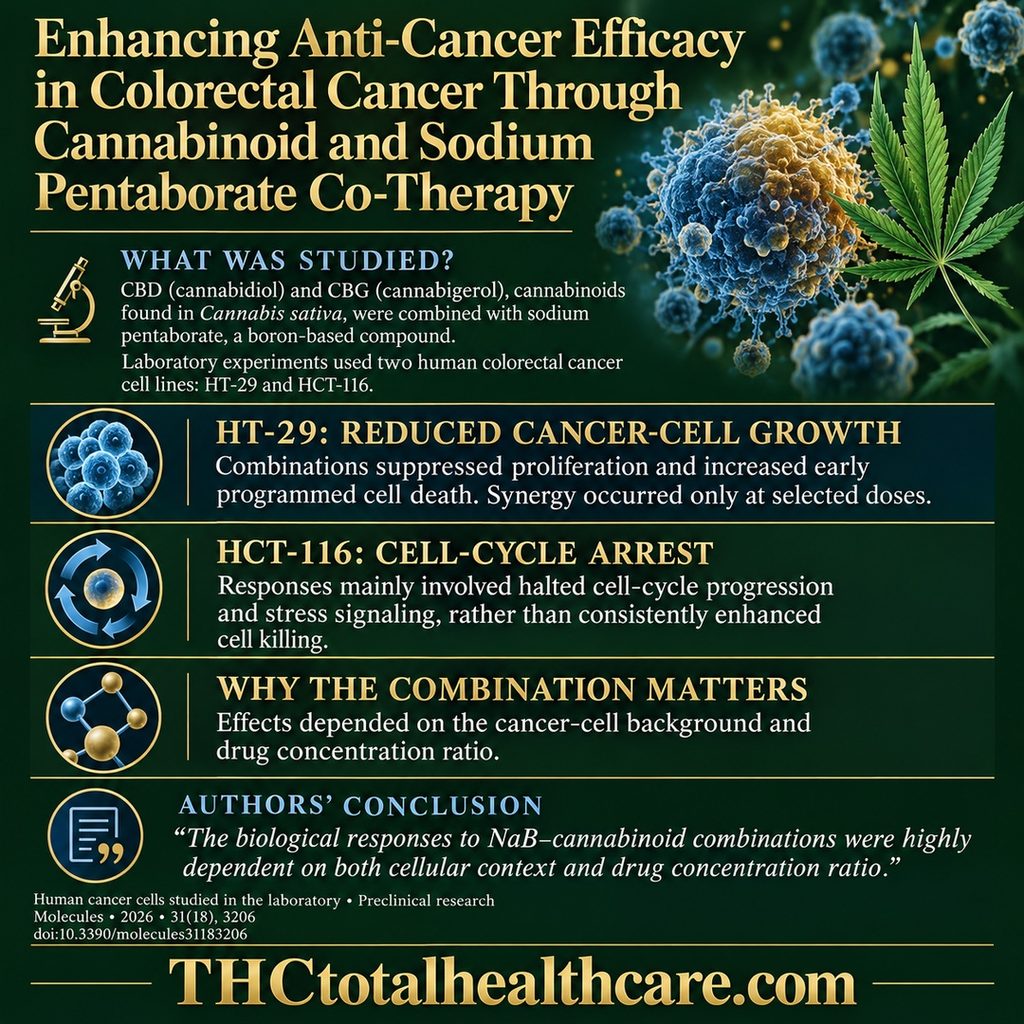
Pharmacokinetic studies and synergistic antitumor effects of cannabichromene and cannabidiol in drug-resistant breast cancers

“Triple-negative breast cancer (TNBC) is highly aggressive with limited treatment options, and resistance to doxorubicin (DOX) further compromises outcomes.

Cannabinoids such as cannabichromene (CBC) and cannabidiol (CBD) possess anticancer properties, but their combined effects in resistant TNBC remain unexplored. This study evaluated the antitumor efficacy of a CBC + CBD combination against DOX-resistant (DOX-RT) TNBC using in vitro, in vivo, and pharmacokinetic models.

Cytotoxicity was assessed in DOX-RT MDA-MB-231 cells using 2D and 3D assays, with synergy confirmed by combination index (CI) analysis. Cell cycle and invasion assays were performed. Xenograft studies were conducted in BALB/c nude mice bearing DOX-RT tumors treated intraperitoneally with CBC (10 mg/kg), CBD (20 mg/kg), or CBC + CBD. Pharmacokinetics were evaluated in rats, complemented by GastroPlus™ simulations.

CBC + CBD synergistically inhibited cell growth induced G0/G1 arrest, and reduced invasiveness by ~ 55% in a Transwell Matrigel invasion assay. In xenografts, combination therapy reduced tumor volume by two-folds compared to single treatments and fourfolds versus control. Western blotting revealed downregulation of MEK/ERK, PI3K/AKT/mTOR, Cyclin D1, CDK6, SOD2, and NF-κB. Pharmacokinetic studies showed co-administration increased Cmax and AUC without altering Tmax, supported by simulations predicting enhanced jejunal absorption. CBC + CBD co-therapy demonstrates synergistic efficacy against resistant TNBC by inhibiting oncogenic pathways and enhancing systemic exposure.

This first study of its kind highlights CBC + CBD as a promising strategy to overcome DOX resistance in TNBC.”

https://pubmed.ncbi.nlm.nih.gov/41670942

https://link.springer.com/article/10.1007/s13346-026-02057-1

Activation of Cannabinoid Receptor 1 Enhances Wound Healing by Promoting the Proliferative Phase

“The mechanisms underlying wound healing mediated by cannabinoid receptor 1 (CB1)-known for its neuromodulatory functions-remain incompletely understood. Therefore, we investigated the impact of activating CB1 using specific agonists, both in vitro and in vivo, with a focus on wound healing.

In the in vitro study, fibroblasts were isolated and cultured from the dermis of human skin and treated with a CB1 agonist, 2-arachidonyl glyceryl ether (2-AGE). In the in vivo study, a mouse acute wound model was created using a skin biopsy punch and treated with the CB1 agonist arachidonoyl 2′-chloroethylamide (ACEA).

The in vitro study revealed that 2-AGE increased cell proliferation and differentiation, upregulated the expression of alpha-smooth muscle actin (α-SMA), N-cadherin, and vimentin, and enhanced cell migration as well as the synthesis of type I and III collagen and fibronectin in normal human dermal fibroblasts. The CB1 antagonist AM251 abolished 2-AGE-induced expression of α-SMA, type I collagen, and fibronectin. In vivo, ACEA treatment accelerated wound closure, increased expression of α-SMA, type I collagen, and fibronectin, and ultimately increased epidermal and dermal thickness.

Overall, these findings suggest that the activation of CB1 promotes wound healing and provides evidence for the therapeutic potential of CB1 agonists in wound treatment.”

https://pubmed.ncbi.nlm.nih.gov/41683598

“Recent research has highlighted the role of the endocannabinoid system (ECS) in skin physiology and repair.”

“Clinical evidence indicates that the topical application of Cannabis-Based Medicines (TCBMs) facilitates tissue repair and promotes complete wound closure in previously refractory wounds.”

“In conclusion, our findings support the hypothesis that CB1 receptor activation facilitates wound healing through both cellular and molecular mechanisms.”

“Thus, these findings strongly support the therapeutic potential of targeting specific agonists as a viable strategy to accelerate the proliferative or contractile phases and thereby enhance the rate of wound healing.”

https://www.mdpi.com/1422-0067/27/3/1171